GOOD NEWS: In Person Matters
Good News: An enewsletter for donors and nonprofits
on strategic planning, governance, fundraising, and executive leadership.

In Person Matters
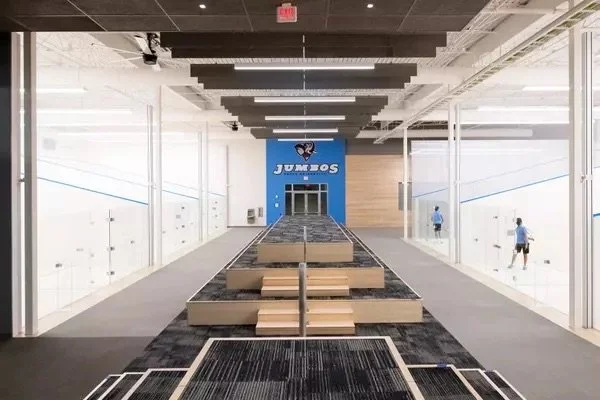
At a recent memorial service for my college squash coach a few Saturdays ago, his brother said, “My brother believed that being together in person is no small thing.” Amen to that.
Why should my donor and nonprofit clients reflect on this point? Because their boards, donors, and those who benefit from their services need them to.
I spend a lot of time getting to know boards. It is all too common for them to tell me that they feel as though they don’t know their fellow board members or staff leadership. Some confess to never having even met fellow members in person after years on the board. What a shame.
Build Robust Pipelines
Attend any wealth management staff meeting and you will hear regular discussion about pipelines or funnels. These professionals know that to generate a certain number of clients, they need to generate many more prospective clients. Talk of leads, prospects, and touches demonstrates the understanding that all sales positions, and fundraisers, are engaged in an exercise with a high (95%?) “failure” rate. They hear no, or nothing at all, way more then yes or even maybe. So consider what number of wins you need for success and plan for many more attempts. Think of those not yet saying yes not as failures but as successful research that will lead you to the yes’s.
Embrace Accountability
Wealth management staff meetings sound quantitative. “How many prospects are in the pipeline?” “How many people do you plan to meet this week, month, and quarter?” "How many contacts have you had with that client?" Updates providing the answers to such questions and conversations about each interaction lead to productive plans for next steps, including pausing some people and projects. Too many development meetings I attend focus only on the amount of money raised which may not be the most telling signal of progress, even if it is an important bottom line.
Do Good
As a young person I was told that if I wanted to make a small fortune in life, give a big fortune to a wealth manager. The joke implied that professionals in that field were maybe not so good at their jobs and perhaps motivated by self-interest. While it is not hard to find examples of some who fit that model, my actual lived experience is that the people I've met and worked with are motivated by a sincere desire to help people plan so that client financial security, hopes, and dreams are possible. A few such firms of which I am aware even give away to the community 10% of their profits each year and love it. Imagine a world where more for-profit entities did that? Or even where more exceedingly well resourced nonprofits shared their relative wealth more with others?
Like some of the wealth managers I've met, the most cherished donors and nonprofits also are positioned as trusted advisors on important matters.
Routinely I hear from nonprofit clients that funding from donors is important, of course, but it is not as important as having people they can turn to as an objective sounding board. My donor clients also report appreciating the opportunity to learn from and with their grantees.
So take a look at wealth management firms if you want closer relationships with your key stakeholders, accountable and measurable outreach, and philanthropic role models.
Stuff Steve is Watching, Listening to, and Reading
Make Your Bed (20 minute watch)
"A circus is two hours of additional calisthenics, designed to wear you down, to break your spirit, to force you to quit. No one wanted a circus. As circus meant that for that day, you didn't measure up. A circus meant more fatigue. And more fatigue meant that the following day would be more difficult and more circuses were likely. At some time during SEAL training, everyone made the circus list. But an interesting thing happened to those who were constantly on the list. Over time, those students who did two extra hours of calisthenics got stronger and stronger. The pain of the circuses built inner strength and resilience. Life is filled with circuses. You will fail. You will likely fail often. It will be painful and discouraging. At times it will test you to your very core. But if you want to change the world, don't be afraid of the circuses." Admiral William McRaven, University of Texas at Austin 2014 Commencement Speech
Watch Here
The Public Philosopher (75 minute listen)
"We're not in a good place. Our civic life is not going well. The divide between winners and losers has been deepening in recent decades, poisoning our politics and driving us apart. I think this has partly to do with the deepening inequality of income and wealth that came about as a reasult of the market driven globalization of the last four decades. But it's not only that. It has also to do with the changing attitudes towards success and failure, winning and losing, that have come with it. Those who landed on top during the era of globalization came to believe that their success was their own doing, a measure of their merit. And those left behind deserved their fate as well. It's these attitudes toward winning and losing that have generated the sense among many working people, those who struggle, those who did not gain from globalization, the sense that elites look down on them. This sense of humilation, really, demoralization, is what has fueled the populist backlash against elites and the mainstream political parties who presided over these past four decades of market driven globalization and rising inequality." Professor Michael Sandel with Rob Johnson on Economics & Beyond
Listen Here
The Dumbest Metric in Philanthropy (3 minute read)
“If we're going to move beyond overhead ratios, we need better questions. Ones that actually get at organizational health, sustainability, and impact. Here are three I think every donor and funder should be asking:
1. Is this organization capitalized to deliver sustainable impact? This shifts from 'are you efficient?' to 'are you built to last?' It asks whether the organization has the people, systems, and infrastructure needed to deliver on promises over time. Not just this year, but for the next five years. A low overhead ratio tells you nothing about sustainability. This question does.
2. How does your spending align with your stated values? This gets at integrity and coherence. If an organization says it values staff wellbeing but pays below-market salaries, that's a problem. If it claims to prioritize equity but leadership compensation is wildly disproportionate to frontline staff, that's worth examining. Overhead percentage can't tell you any of this. But asking about values alignment can.
3. What's your staff retention rate, and what are you doing to support it? Retention is one of the clearest indicators of organizational health. High turnover signals burnout, poor management, inadequate compensation, or unsustainable workloads...all things that undermine impact. If an organization has low overhead but loses talented staff every 18 months, is that really efficiency? Or is it just externalizing costs onto people until they burn out?
These questions aren't perfect. But they're a hell of a lot better than 'what's your overhead ratio?' Tara Quarrie